Pages

Showing posts with label copy. Show all posts

Wednesday, 3 September 2014

Rob Pointon

"Rob Pointon is without question one of the most exciting artists working and living in the UK."

Rob Pointon happy at work

As part of my GCSE coursework, one of my artists that I studied over the 2 years was Rob Pointon. I first saw his work at The Crick Show- a boat show, mainly for narrowboats. Unfortunately I didn't meet him here as he just finished a painting and went to get some refreshments and leave his painting to dry. Although he wasn't there personally, co-workers of his told me that he aims to support all young artists. Soon after, I emailed him about using him as an artist study in my GCSE art and he seemed enthralled. As soon as I saw his work, I was able to spot inspiration from artists old and young, everyone from Monet to Van Gogh, I was able to see in his work. On his website, he is described as "without question one of the most exciting artists working and living in the UK" and I can certainly agree with it.
The Crick Show, where I first saw Rob Pointons' work

Rob Pointon brings a new perspective to painting. An understanding of drawing can be seen at the core of his work, although now working mainly in oils and working 'en plein air'. Rob has a great distinguishing characteristic in his use of a wide-angle perspective- at times as far as 360° "which enables him to encompass a phenomenal sense of the world around him in a single canvas". 

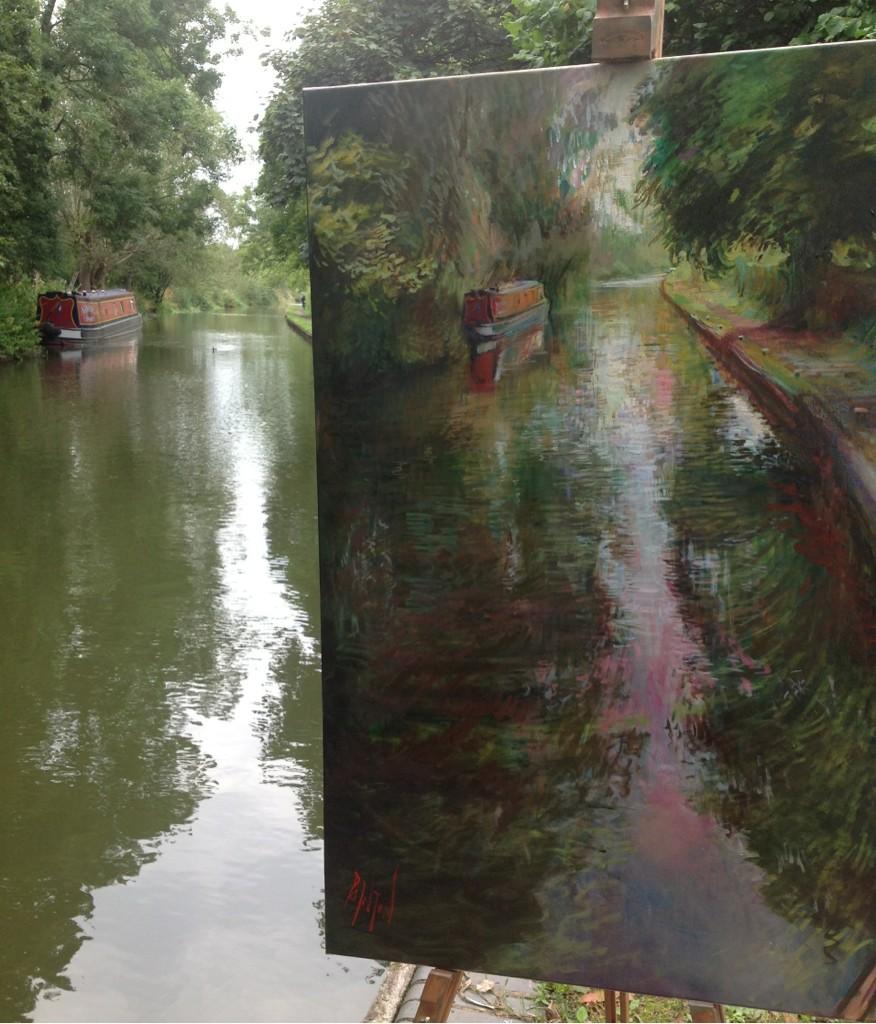
A photo of his work alongside the area he painted, presumably in the English Canal System
At such a young age, Rob has already travelled to many countries and taken a year to travel the canals of Britain, while painting. All his paintings from this year trip have been put on display around the country in exhibitions called 'Year of the Boat'. Rob has also painted over 75 paintings and has been awarded the 'Young Artist Award from NADFAS (2005)'. He has now continued to paint and exhibit his work around the country.
Cronk Hill
Using oil paints with bright, vibrant colours, Rob creates detailed and realistic paintings grasping the beauty of some unnatural places. He says himself "On the boat you slowly and silently glide through this alien cathedral of artificial noise and vibration..." I also find that Rob's paintings has an abstract feel about them, because of his use of wide-angle perspective.
Pontcysyllte Aqueduct
On his website he is described as; "Rob Pointon is without question one of the most exciting artists working and living in the UK. His exceptional talents have been recognised by a hst of comissions and acquisitions by high profile collectors, of whom the list  is headed by HRH The Prince of Wales and Her Grace Deborah, Duchess of Devonshire. Rob was the Regional Winner in last year's Fine Art Open Competition at Weston Park and works that he subsequently produced of the V Festival and Guild of British Travel Writers Dinner were purchased by the Trustees of the Weston Park Foundation as a part of the inalienable collections of that House where they have joined the ranks of exceptional and internationally significant works by John Constable, Sir Anthony van Dyck and Holbein. Born in North Staffordshire, Rob is proud of his Potteries roots and, unsurprisingly, the industries and their legacy within that region feature frequently in his works. Having graduated with First Class honours from the University of Wales Aberystwyth, Rob undertook a postgraduate course at The Prince's Drawing School in London. An understanding of drawing can be seen at the core of Rob's works, although now working predominantly in oils and working en plein air. The great distinguishing characteristic is his use of a wide-angle perspective - at times as far as 360 degrees - which enables him to encompass a phenomenal of the world around him within a single canvas.' Gareth J.L. Williams M.A., Curator and Head of Learning to the Weston Park Foundation
Chirk Aqueduct

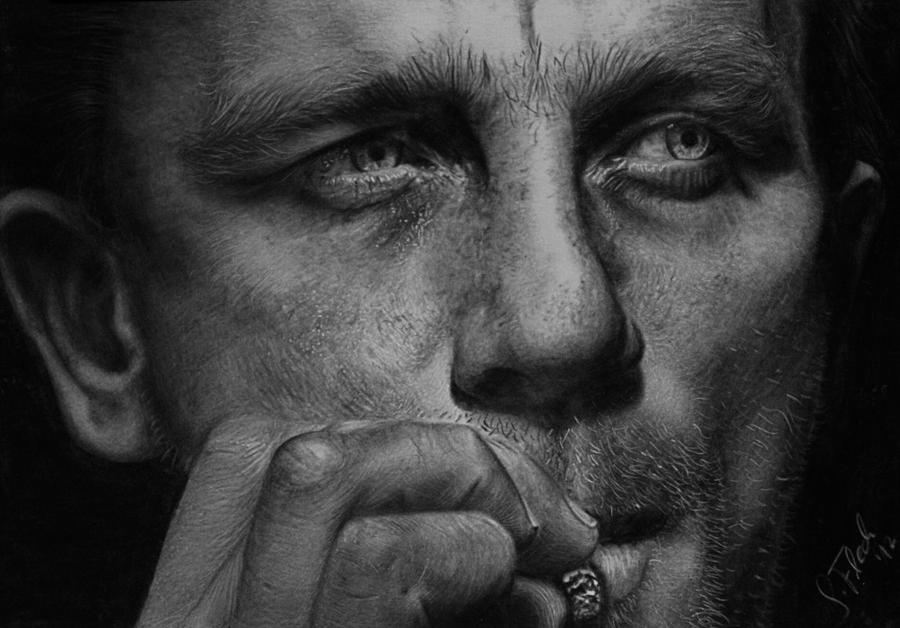
A copy of Rob Pointon's work as part of my GCSE coursework

Friday, 25 July 2014

Hyperrealism

"Hyperrealism is a genre of painting and sculpture resembling a high-resolution photograph."

The early 21st Century Hyperrealism was founded on the aesthetic principles of Photorealism. American painter Denis Peterson, whose pioneering works are universally viewed as an offshot of Photorealism, first used "Hyperrealism" to apply to the new movement and its splinter group of artists.
However, Hyperrealism is contrasted with the literal approach found in traditional photorealist paintings of the late 20th Century. Hyperrealist painters and sculptors use photographic images as a reference source from which to create a more definitive and detailed rendering, one that often, unlike Photorealism, is narrative and emotive in its depictions.

Hyperrealism, although photographic in essence, often entails a softer, much more complex focus on the subject depicted, presenting it as a living, tangible object. These objects and scenes in Hyperrealism paintings and sculptures are meticulously detailed to create the illusion of a reality not seen in the original photo. This is not to say they're surreal, as the illusion is a convincing depiction of (simulated) reality. Textures, surfaces, lighting effects, and shadows appear clearer and more distinct than the reference photo or even the actual subject itself.

Subject matter ranges from portraits, figurative art, still life, landscpaes, cityscapes and narrative scenes. The more recent hyperrealist style is much more literal than Photorealism as to exact pictorial detail with an emphasis on social, cultural or political themes. 
Hyperreal paintings and sculptures further create a tangible solidity and physical presence through subtle lighting and shading effects. Shapes, forms and areas closest to the forefront of the image visually appear beyond the frontal plane of the canvas, and in the case of sculptures, details have more clarity than in nature. Hyperrealistic images are typically 10 to 20 times the size of the original photographic reference source, yet retain an extremely high resolution in colour, precision and detail. Many of the painting are achieved with an airbrush, using acrylics, oils or a combination of both.

Tuesday, 1 July 2014

True Art?

What is the real definition of true art?
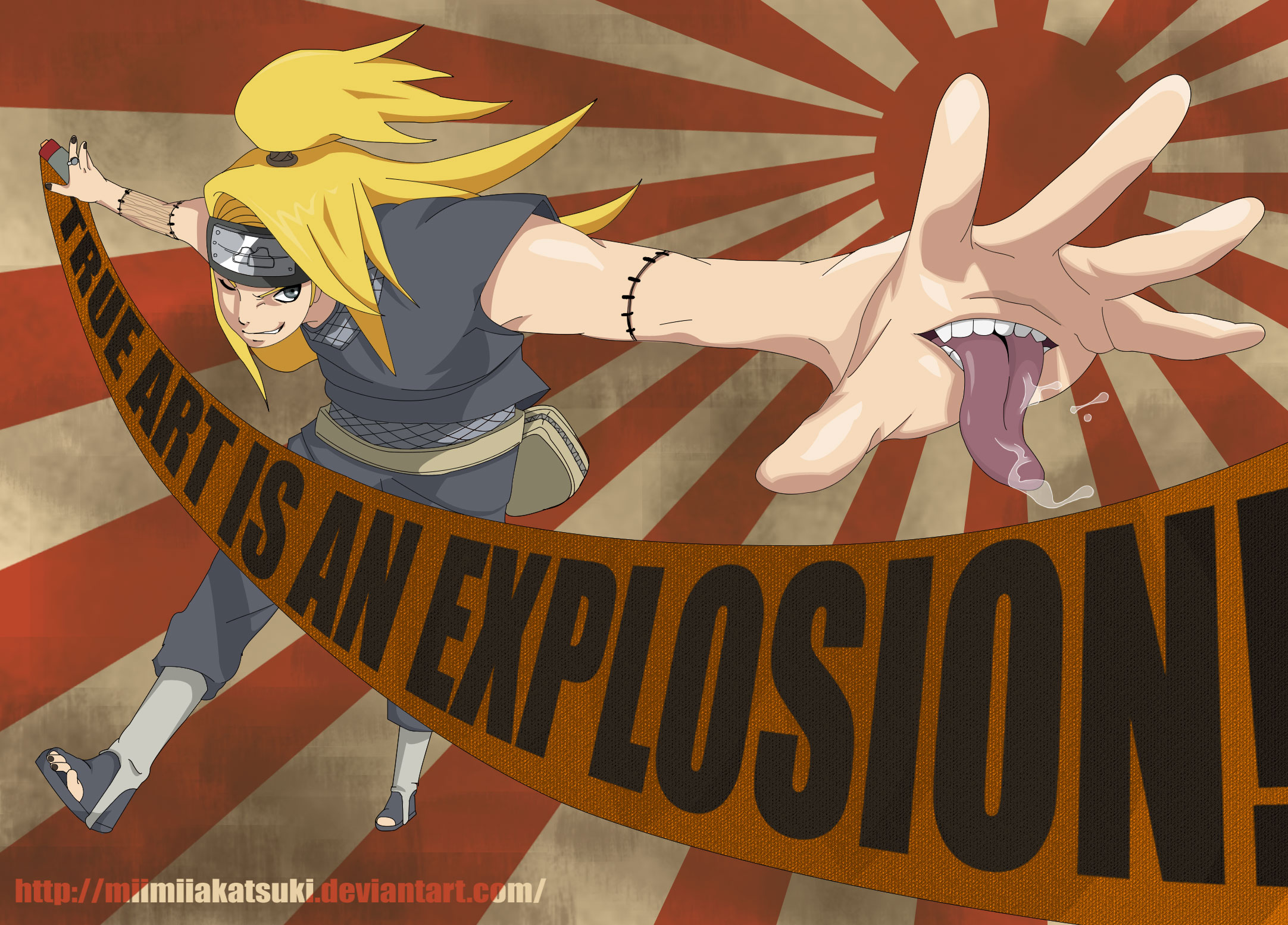
What is true art? Can it be described as an explosion?

There are thousands upon millions of definitions of what true art is, but it really depends on the person you talk to.
Is this true art?

There are also many different types of art which include everything from drawing and fine art to dance and music. Art is a general term for a way to release our emotions in a unique and interesting way. People within the world can specialize in one or more of these expressive arts at different or perhaps at the same time - some artists sing while they draw or paint and some dancers are able to perform drama in their dances. 

True art - "First of all, true art means producing art that is formed by its context and traditions. Good art shows an awareness of artistic traditions. There is always an element of inter-textuality in art - the appropriation and re-appropriation of other artistic artifacts and techniques. Art is an ongoing conversation. True are is aware of that conversation and therefore able to engage meaningfully in that conversation. True are, therefore, cannot be conducted in isolation from the wider culture. We may sometimes speak from the margins, but we cannot speak from the ghetto." - True Art Defined
My own art: A Copy

Personally, the definition of true art, and art itself is "the expression of human emotions through a variety of media" because that is simply the broad term for art. Any way you express your emotions, you can be showing art. For me, true art also has a background story; every single piece of art be that music, photos or a painting, when it had a background story not only does it make the art piece a lot more interesting but it adds value if people know about the story and if it is a good one too.

However there is also another side of art where you are simply copying photos and other drawings or paintings. Some people believe that this is not true art because it does not express emotion or anything else because it is simply a copy, but, and this is a big but, every single piece of art tells its own story even if it is a copy. It is a copy with a new background story, a copy that is technically a new piece because it is its own.
A copy is an original.

What are your definitions of true art?